Creating a couture-style jacket isn’t an easy project, but don’t be deterred by this. We wanted to encourage crafters to try their hand at couture sewing, using this guide as a starting point. Read along and start making your very own Chanel-inspired tweed jacket.
Couture Sewing Guide: How to Create a Chanel-Inspired Jacket
There’s nothing that says couture quite like a Chanel tweed jacket! It’s a style that the French fashion house has produced periodically since the 1920’s, reinventing a short, boxy style with tweeds in different colours and finishes - with boucle being the most frequently opted-for. Celebrities have coveted these pieces, meanwhile crafters have been eagerly recreating them.


Understanding what ‘couture’ really means in the context of sewing
Couture sewing is a method in itself, and it certainly requires some patience. Unlike conventional garment creation, couture prioritises hand techniques, precision, and a clear mindfulness towards handling the fabric.
What we mean by ‘Chanel-inspired'
Chanel-style jackets are not structured through heavy interfacings or padding. Capturing this look relies on careful layering, choosing the right tweed, and using interfacing to create a subtle but sleek silhouette. The goal is to create a jacket that has a luxurious appeal, and a well-defined shape. Our Eden jacket sewing pattern is a great starting point if you’re new to working with tweed, but you want to try and capture this designer-feel.

Choosing the right tweed fabric
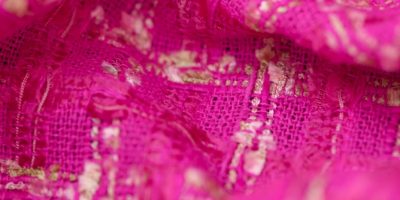
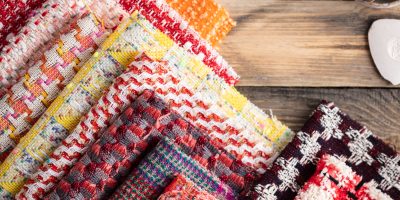
Fabric choice is the foundation of any couture jacket, and it is especially crucial when working in a traditional tailored style. Tweeds used for these jackets are typically light to medium weight, with rich textures, and often incorporate fancy yarns, bouclé loops, or subtle metallic threads.
When selecting your fabric, consider not only colour and pattern, but also handle and weight. The tweed should drape naturally and respond well to light shaping, rather than feeling stiff.
It is also worth thinking about how the fabric will interact with trims and lining, too. Chanel-inspired jackets often feature decorative touches, fringing, or contrast details that frame the edges; a multi-toned tweed or a textured yarn will complement this beautifully
Preparing your fabric
Thinking ahead to creation actually means preparing your tweed fabric first - taking the time to do this will make handling the tweed easier, and it’s a good habit to get into if you’re new to crafting. Expert crafters know to let their tweed settle before cutting, and some will also lightly press or steam their fabric if the tweed has a fold line from delivery and leave it to rest flat for at least 24 hours before they start working with the fabric. Steps like this help to prevent distortion. And will ensure the jacket maintains its shape over time.

The importance of having a test piece
The fit of your Chanel-inspired jacket needs to be precise if you want to capture the refined, polished look that the brand is synonymous with. Creating a test version (known as a toile made from a plain weave calico or using a similar weight of tweed) will give you the opportunity to refine measurements and review the shape of the jacket, before cutting into your tweed.
You’ll need to pay particular attention to the shoulders, neckline, and sleeve placement. The jacket should skim the body without pulling or gaping, and the hem should sit evenly. Couture fit adjustments are subtle, but they are what give the final piece that ‘effortless’ finish.
Constructing the body of the jacket
Traditional Chanel-style jackets are constructed using a layered method rather than fused interfacings. A lightweight underlining, often silk, is hand-stitched to each piece of tweed. This provides stability, while allowing the fabric to retain some natural movement. One of the defining features of this style is the way the lining is attached.
Seams are typically sewn by machine, and then finished by hand, and the jacket is shaped gradually through careful pressing and gentle handling.
Quilting the lining
Quilting the lining to the tweed is a hallmark of couture jacket crafting, and this process involves hand-stitching the lining to the outer fabric in a subtle grid or pattern, attaching the layers together while keeping some softness.
The quilting stitches should be invisible from the outside, working with the weave of the tweed rather than against it. This is one of the more time-consuming steps of the process, but it is a must if you want the jacket to sit comfortably.
Trims, details & finishing touches
The details on your Chanel-inspired jacket will be where the style really comes to life. Braided trims, contrast piping, decorative buttons, and fringed edges are all things you could consider, but if you’re new to crafting with tweed you might want to keep it simple, including a trim that complements the colour of your fabric.

Be patient and take your time
The biggest thing you’ll learn when creating a Chanel-inspired jacket is how to be a more patient crafter - tweed is known for this! At each stage of the project, you’ll learn more about handling tweed and working with the fabric to make the finish seamless - but don’t expect this from the offset if this is your first project.
Expert tip on crafting your Chanel-inspired tweed jacket
If we had to share what we believe is the most important tip in creating something that has the Chanel-inspired design hallmarks, it’d be to choose the right fabric. Order sample sizes before your full quantity, and try different stitches out to understand how the fabric will respond. Once you have found a fabric that balances structure with softness, you’ll have the perfect base for your designer-inspired garment.
To get some ideas for your next project, visit our community page, where you can see creations shared by other makers.